Phone Etiquette for Indian Small Teams: A Checkable Standard
Phone etiquette for a small business team is a short set of rules with numbers: answer quickly, introduce yourself, ask before holding, return missed calls, and check each against call records.

By Tej Pandya, Founder · Updated 24 Oct 2026
Key takeaways
- A team's phone etiquette works when every rule has a number and a test: pick up within three rings, greet with business and own name in under 8 seconds, ask before holding, and call back every missed call by the end of that working day.
- Businesses calling customers in India must use a registered 140-series number for sales calls and a separate registered series for service calls. A 10-digit mobile number risks disconnection.
- In a July 2026 LocalCircles survey of 20,456 mobile subscribers, 97% reported daily spam calls, so an outbound call should give name, business and reason in its first ten seconds.
- Seven days is enough to check the standard: call history shows whether calls were picked up and returned, and recordings show how they were handled.
In this article
Telling staff to be polite on the phone gives them nothing to do and gives you nothing to check. Etiquette that survives a busy Monday has numbers in it: how quickly a call is picked up, how long a greeting runs, and what happens to a missed call before the shop closes.
Callers in India add a second problem. Spam is so widespread that your call may be judged before you speak, so an outbound call has to say who you are almost immediately. The standard below builds that in, along with the number rules that apply to businesses that call customers.
You get eight rules, a pass or fail test for each, and a seven-day check you can run from your own call history. For wording at specific moments, such as the greeting or the voicemail, we link to the pages that cover them, so this one stays on what to measure.
What is phone etiquette for a small business team?
Phone etiquette is the set of habits that make a caller feel recognised, heard and followed up. For a team it only works as a written standard: a few rules, each with a number to hit and a way to check it. A rule you cannot check stays a hope.
The standard in this page fits on one sheet. A clinic front desk, a shop counter, a school office and a five-person sales team can all use the same eight rules, because they cover the same moments of a call: when it is answered, while it is held, when it is missed, when you call out, and when it ends.
Why can an unknown business number in India be mistaken for spam?
Spam calls reach most Indian mobile users daily, so an unknown business number is easily mistaken for one. A LocalCircles online survey published on 13 July 2026, in which 20,456 mobile subscribers answered, found that 97% receive unwanted sales or robocalls daily and 79% receive three or more. Of the 19,985 who answered the question about sources, 45% said the calls come from mobile numbers that seem to belong to individuals (NewsMeter report of the survey).
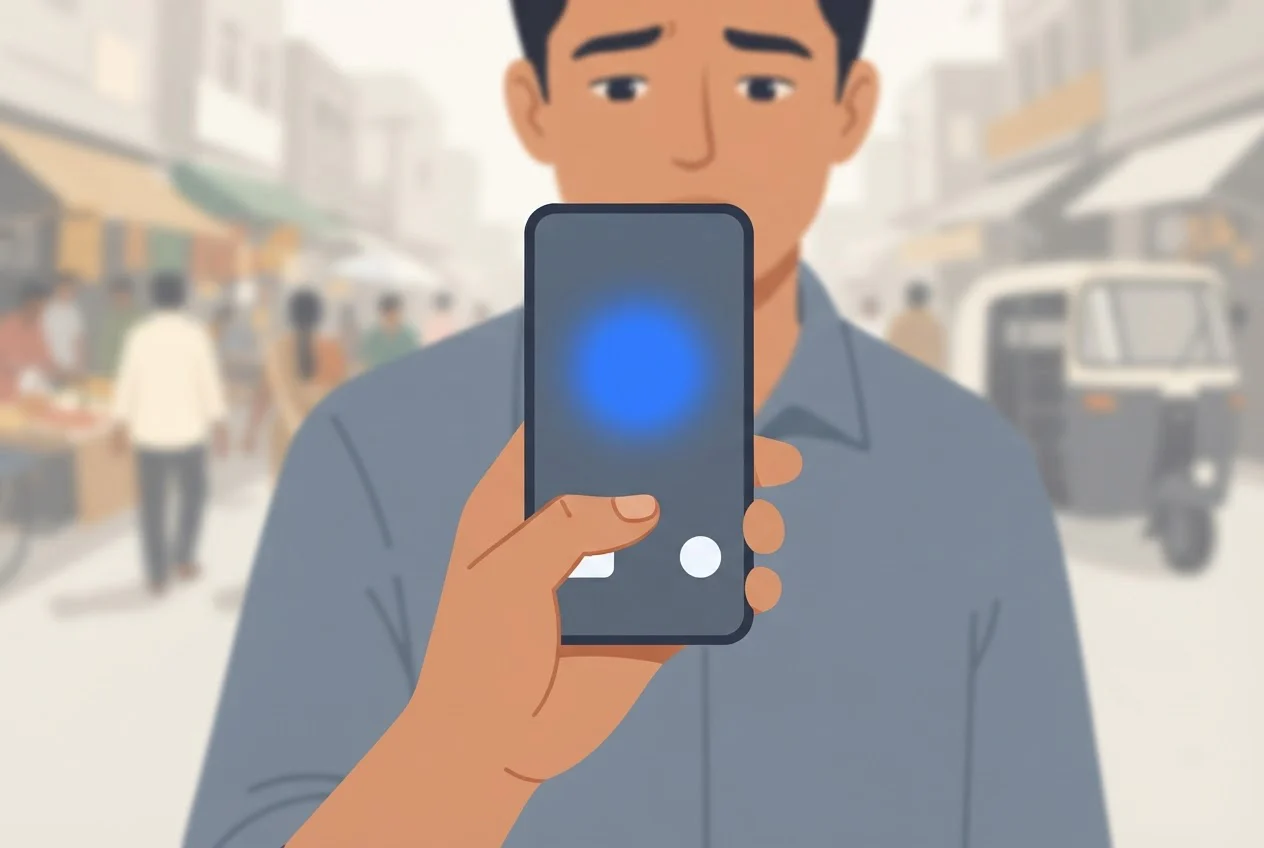
Truecaller's 2025 India report, covered on 11 February 2026, counted 4,168 crore spam calls in India in 2025 (a crore is ten million), with an average spam call lasting 1.8 minutes (FoneArena).
Our recommendation is to treat the first ten seconds of an outbound call as the moment you prove you are not one of those calls: name, business, reason.
The number you dial from matters too. The Telecom Regulatory Authority of India (TRAI) sets separate series for separate calls in its letter of 18 June 2024, which defines senders of commercial communication to include small businesses:
- Sales calls to prospects go out on a registered 140-series number.
- Service and transactional calls to existing customers go out on a separate series, with no upselling on those calls.
- Registration is required through a telecom provider, on the distributed ledger technology (DLT) platform. It includes the voice header, the registered caller identity for the number.
- Any other number: using a 10-digit fixed or mobile number for these calls "may result in disconnection of all telecom resources of the Sender for a period up to two years" (TRAI letter).
Which series carries service calls depends on your sector, and it is changing. As of October 2026, the 1600 series is reserved for service and transactional calls to existing customers by entities regulated by the Reserve Bank of India, the Securities and Exchange Board of India, the Insurance Regulatory and Development Authority of India and the Pension Fund Regulatory and Development Authority, and for government-to-citizen calls. Businesses across sectors use 140 exclusively for promotional calls (TRAI clarification of 13 July 2026, as reported by MediaNama). TRAI's direction of 10 August 2026 created a separate 1601 series for service and transactional calls by businesses outside banking, financial services and insurance, and outside government. Phase I covers utilities and courier and logistics firms, with onboarding due within 90 days of the direction (Storyboard18). If your business is in another sector, ask your telecom provider which series you may use for service calls, and to register the business and issue the header.
A recipient can also complain about an unsolicited commercial call within seven days of receiving it. The amendment was notified on 12 February 2025, and the seven-day window took effect thirty days after its publication in the Official Gazette (TRAI regulations). Whether a particular call counts as commercial is for your telecom provider to confirm.
What does a one-page phone etiquette standard look like?
A one-page phone etiquette standard is eight rules, each with a number and a pass or fail test. The three-ring and 30 to 45 second hold figures come from the UMKC human resources guide. The other numbers are our recommendations; adjust them after your first week of data.
| # | Rule | Standard | Pass or fail test |
|---|---|---|---|
| 1 | Answering | Pick up within three rings in working hours | Make 10 test calls. Pass if at most one rings longer than three times. |
| 2 | Greeting | Business name, then your own name, under 8 seconds | Time 5 recordings. Pass if 4 of 5 meet it. |
| 3 | Holds | Ask before holding; check back every 30 to 45 seconds | Of the holds in 5 recordings, pass if at least 4 asked first and returned within 45 seconds. |
| 4 | Missed calls | Call back every missed call by the end of that working day | Pass if every missed number in call history has an outbound call to it before the end of the same working day. Fail if any is returned later or never. |
| 5 | Outbound opening and hours | Name, business and reason within 10 seconds, then ask if it is a good time. Set calling hours (our recommendation: 9 am to 9 pm) and agree any call outside them by text first. | Pass if 4 of 5 recorded outbound openings include all three, and no outbound call in call history falls outside the set hours. |
| 6 | Calling number | Sales calls to prospects go out on a registered 140-series number; service calls to existing customers on the series your telecom provider confirms for your business, with no upselling | List the caller ID shown on every outbound customer call in the past week from call history. Pass if every sales call shows a registered 140-series number and every service call shows the series your provider confirmed. Fail if any is a 10-digit mobile or landline. |
| 7 | Language | Answer in the language the caller used first, and switch when they do | Pass if at least 4 of 5 recordings where the caller used a different language from the greeting follow the caller's language. |
| 8 | Closing | Repeat the next step and who owns it | Pass if 4 of 5 recordings end with a named step and owner. |
Two notes on specific rows:
- Rules 1 and 2. Wording for the greeting and a test of 10 calls is in our receptionist phone script.
- Rule 4. Treat every missed call as a customer who needs a reply. This is our recommendation. Our missed call callback workflow shows when to create a task for each one. If a call goes to voicemail, keep the greeting short, as in our business voicemail greeting scripts.
How do you check phone etiquette in seven days?
Run it as a week: baseline and caller ID audit on day one, callbacks and calling hours on day two, recordings on days three to five, test calls on day six, and one fix on day seven.

- Day 1: set the baseline and audit the numbersPull your call history and compute the answer rate: calls answered divided by incoming calls in working hours. With illustrative numbers, 96 answered out of 120 incoming is 80%. Write it down. Then list the caller ID shown on every outbound customer call in the past week. Pass if every sales call shows a registered 140-series number and every service call shows the series your telecom provider confirmed; fail if any is a 10-digit mobile or landline (rule 6).
- Day 2: audit callbacks and calling hours (rules 4 and 5)List every missed number from the day before. Pass if each has an outbound call to it before the end of the same working day; fail if any is returned later or never. Then check that no outbound call in call history falls outside your set hours.
- Days 3 to 5: listen to recordings (rules 2, 3, 5, 7, 8)Sample 5 inbound and 5 outbound recordings across staff. Score each rule pass or fail. A rule passes if at least four of five recordings that contain it meet it. If a rule does not appear in your sample (no hold, no outbound opening, no change of language), skip it and sample again for that rule.
- Day 6: make 10 test calls (rule 1)Use a number your staff do not know.
- Day 7: fix one rule
Choose the rule with most failures and coach on that alone. Our guide to coaching telecallers with call recordings shows how to run the session. Repeat the check the following week.
How does TalkEasy help you check the standard?
TalkEasy gives you the records the check needs: call history, call recordings and an analytics dashboard, all on our Pro plan. Our Call Analytics reports show total calls, answer rate, missed calls, average talk time, team comparison and peak calling hours, as daily and monthly reports you can download.
- Rule 4: answer rate and missed calls show how many calls were picked up and which numbers need a callback. Rule 1 still needs the 10 test calls. Peak calling hours show when you need more people on the phone.
- Rules 2, 3, 5, 7 and 8: recordings let you score the call itself, not the staff member's memory of it.
- A shared history: with Team Collaboration, the whole team uses one business number and sees the same call history, recordings and contacts. You review one history, not five phones.
As of October 2026, TalkEasy Pro costs ₹999 + GST (goods and services tax) a month. It includes three hours of talktime a day, and extra talktime costs ₹49 + GST an hour. Paid plans include unlimited users and contacts, and you can cancel anytime. Enterprise is quoted individually.
Check your own team's calls against this standard
Frequently asked questions
Sources
- 1.TRAI, Important Guidelines for sending commercial communication through Voice Calls or SMS, letter of 18 June 2024
- 2.TRAI, Telecom Commercial Communications Customer Preference (Second Amendment) Regulations, 2025, notified 12 February 2025
- 3.MediaNama, report on TRAI's clarification on designated number series, 13 July 2026
- 4.Storyboard18, report on TRAI's 1601-series direction, 10 August 2026
- 5.NewsMeter, report of the LocalCircles pesky calls survey, 13 July 2026
- 6.FoneArena, report of Truecaller's 2025 India Insights, 11 February 2026
- 7.UMKC Human Resources, Tips and Tricks for Telephone Etiquette
- 8.TalkEasy Call Analytics
- 9.TalkEasy Team Collaboration
- 10.TalkEasy pricing